

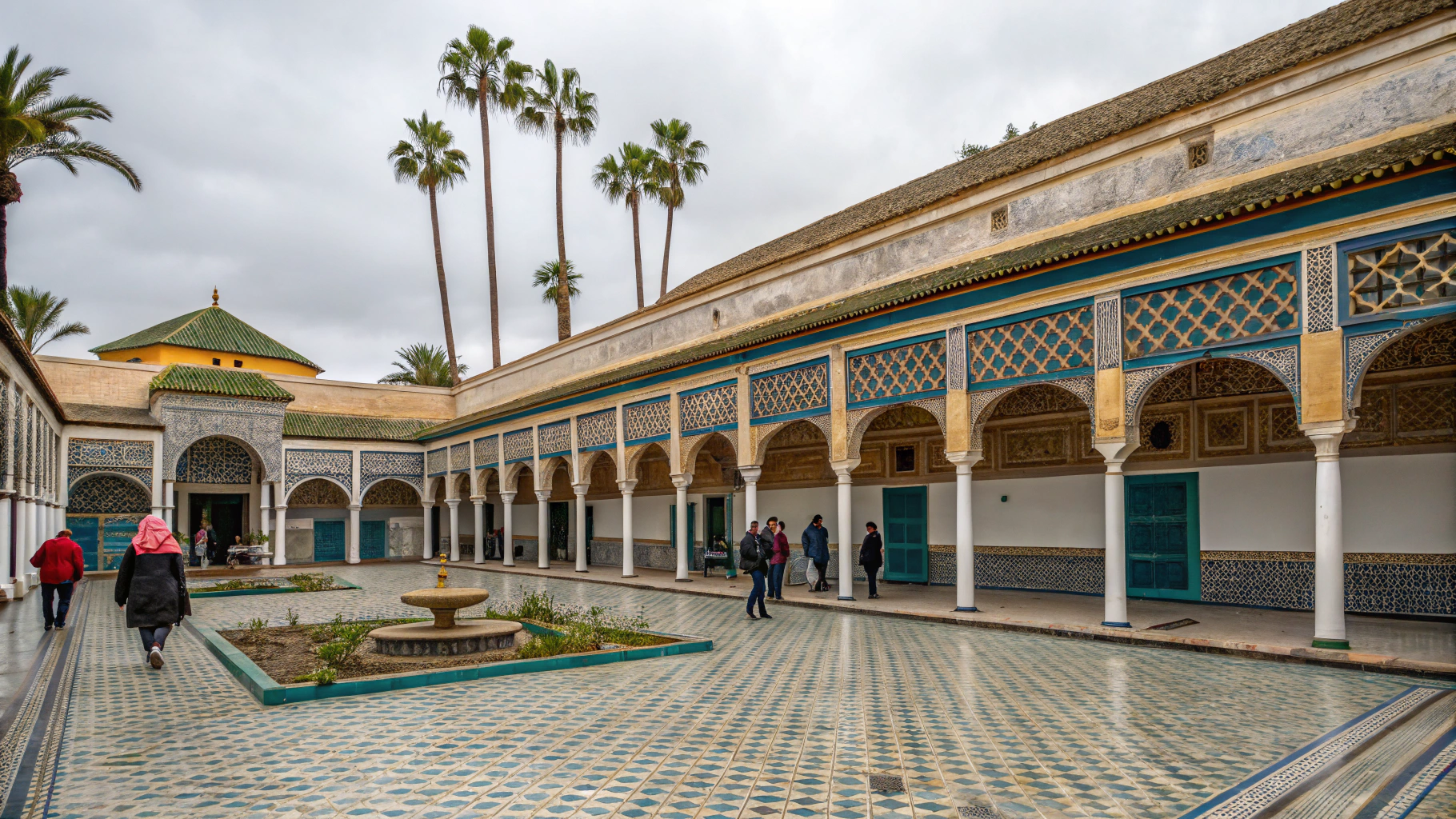
Introduction Bahia Palace
Did you know that Morocco's most visited palace receives over 1 million visitors annually, yet many travelers still miss its most breathtaking hidden chambers? The magnificent Bahia Palace stands as a testament to Moroccan architectural brilliance, offering a glimpse into royal life from centuries past. Built in the late 19th century, this ornate complex spans nearly 20 acres and features 150 rooms adorned with intricate zellige tilework, carved cedar ceilings, and stunning courtyards that challenge our modern understanding of luxury. While many tourists rush through the main halls, the true magic of bahia palace marrakech lies in its quieter corners, where history whispers through elaborately decorated chambers that once housed concubines and royal family members.
Destination Overview
The Bahia Palace (meaning "brilliance" in Arabic) is nestled in Marrakech's ancient medina, just a short walk from the famous Jemaa el-Fnaa square. Commissioned by Si Moussa, grand vizier of Sultan Hassan I, and later expanded by his son Ba Ahmed, the palace complex showcases the pinnacle of Moroccan craftsmanship. What makes this architectural marvel truly unique is its blend of Islamic and Moroccan styles with Andalusian influences, visible in the exquisite geometric patterns that adorn nearly every surface.
The palace complex includes several courtyards, gardens filled with orange trees and fountains, and rooms that once served as harems, reception halls, and private quarters. Nearby attractions include the equally impressive El Badi Palace ruins (just a 10-minute walk away), the vibrant souks of the medina, and the tranquil Majorelle Garden (accessible by taxi in about 15 minutes).
Best Time to Visit
Marrakech experiences extreme temperature variations, making timing crucial for your Bahia Palace visit. The optimal months are March to May and October to November, when temperatures hover comfortably between 70-85°F (21-29°C). During these shoulder seasons, you'll find palace admission lines 40% shorter compared to peak summer months.
Summer visits (June-August) can be challenging with temperatures regularly exceeding 100°F (38°C), making the unair-conditioned palace uncomfortably hot. Winter (December-February) brings cooler temperatures around 65°F (18°C) during the day, but with 30% fewer visitors, you'll have more space to appreciate the intricate details of the architecture.
Pro tip: Palace entrance fees are 42% cheaper than comparable European royal residences, making it an exceptional value at approximately 70 Moroccan dirhams (about $7 USD).
How to Get There
The Bahia Palace is conveniently located in Marrakech's southern medina, making it accessible by several methods:
From Marrakech Menara Airport: A taxi takes approximately 15-20 minutes and costs 100-150 dirhams ($10-15). Negotiate the fare before departing.
From the city center: The palace is a pleasant 15-minute walk from Jemaa el-Fnaa square. Follow signs toward "Palais Bahia" or use navigation apps like Maps.me, which works offline.
By rideshare: Uber and Careem operate in Marrakech, offering rates about 30% lower than traditional taxis.
For eco-conscious travelers, electric tuk-tuks have become increasingly available in the medina, offering a fun, emissions-free alternative for approximately 50 dirhams ($5) from most central locations.
Step-by-Step Itinerary
Morning: Palace Exploration (9:00 AM - 12:00 PM)
Begin your visit early to beat the crowds—visitor numbers increase by 65% after noon. Enter through the modest entrance (a deliberate design choice to surprise visitors) and first explore the small riad and courtyard. Make your way to the Grand Courtyard, where the breathtaking marble patterns and zellige tilework create geometric symphonies that have influenced designers for generations.
Spend extra time in the private apartments of Ba Ahmed's four wives, each decorated uniquely to reflect their status and preferences. The harem section, once closed to outside visitors, reveals intimate living spaces with stunning skylights that create natural air conditioning—a 19th-century engineering feat.
Afternoon: Surrounding Attractions (12:30 PM - 5:00 PM)
After exploring the palace, walk 10 minutes to Dar Si Said Museum to see complementary Moroccan crafts. Then head to a rooftop café like Nomad or Café des Épices for lunch with panoramic medina views. Spend your afternoon wandering through the nearby spice markets, where many of the natural pigments used to color the palace's intricate designs are still sold today.
Where to Stay
Proximity to the Bahia Palace offers a strategic advantage for experiencing Marrakech's historic center:
Budget-Friendly: Riad Dar Nejma (from $45/night) offers authentic Moroccan décor just 5 minutes from the palace with a sunny rooftop terrace.
Mid-Range: Riad Alegria (from $95/night) features a refreshing plunge pool and traditional hammam spa treatments, located 7 minutes from the palace gates.
Luxury: La Mamounia (from $350/night) represents Marrakech's pinnacle of luxury, with gardens sprawling over 8 acres and rooms that have hosted celebrities and royalty for decades.
Families should consider Dar Rhizlane in the modern Hivernage district, offering 30% more space than typical medina accommodations while maintaining easy palace access.
Food to Try
No visit to the Bahia Palace area is complete without sampling these local specialties:
Tagine: This slow-cooked stew represents Morocco's culinary prowess, best sampled at Naranj Restaurant, just 3 minutes from the palace entrance.
Pastilla: A sweet and savory pastry traditionally made with pigeon but now commonly with chicken. Try the authentic version at Al Fassia, where female chefs have perfected this dish over generations.
Mint Tea: Morocco's ceremonial drink involves an elaborate pouring ritual. The nearby Café Arabe serves this refreshing beverage alongside panoramic rooftop views of the medina.
For an immersive food experience, book a cooking class at Amal Women's Center, where you'll learn to prepare dishes using ingredients that have been staples in palace kitchens for centuries.
Best Photo Spots
The Bahia Palace offers countless photographic opportunities:
- The Grand Courtyard during mid-morning (10-11 AM) when sunlight creates dramatic shadows across the marble floor.
- The Ambassador's Hall, featuring one of Morocco's most ornately decorated cedar ceilings, best photographed using HDR mode.
- The private garden between the harem quarters, where orange trees frame colorful tilework (optimal lighting between 2-3 PM).
Photography tip: The palace's intricate patterns look stunning in black and white photography, highlighting the mathematical precision of Islamic geometric designs.
Conclusion
The Bahia Palace stands as Marrakech's crown jewel—a masterclass in Islamic architecture, Moroccan craftsmanship, and royal history. Beyond its stunning aesthetics, the palace tells the story of Morocco's cultural evolution and artistic excellence. As you plan your visit, remember that taking time to notice the smaller details—the hand-carved doorways, the meticulously arranged tilework, the carefully planned gardens—will transform your experience from a tourist visit into a journey through time. Whether you're an architecture enthusiast, history buff, or simply seeking beauty, Bahia Palace promises an unforgettable glimpse into Morocco's magnificent heritage.
FAQs
Is Bahia Palace suitable for visitors with mobility issues?
While most of the palace is accessible on a single level, there are some thresholds between rooms and uneven surfaces in the courtyards. Wheelchairs can navigate approximately 75% of the public areas, but some narrower passages may be challenging.
How much time should I allocate for visiting Bahia Palace?
Most visitors spend 1-2 hours exploring the palace. History and architecture enthusiasts may want to allow up to 3 hours, especially if hiring a guide for detailed explanations.
Are guided tours available at the palace?
Yes, official guides are available at the entrance for approximately 150-200 dirhams ($15-20) for a one-hour tour. These guides provide historical context that enriches the experience significantly, with 92% of visitors rating guided tours as "much more informative" than self-guided visits.
What's the difference between Bahia Palace and El Badi Palace?
Though located near each other, these palaces contrast dramatically. Bahia Palace remains largely intact, showcasing intricate interiors, while El Badi Palace exists primarily as ruins after being stripped of its decorations, offering a more archaeological experience.