

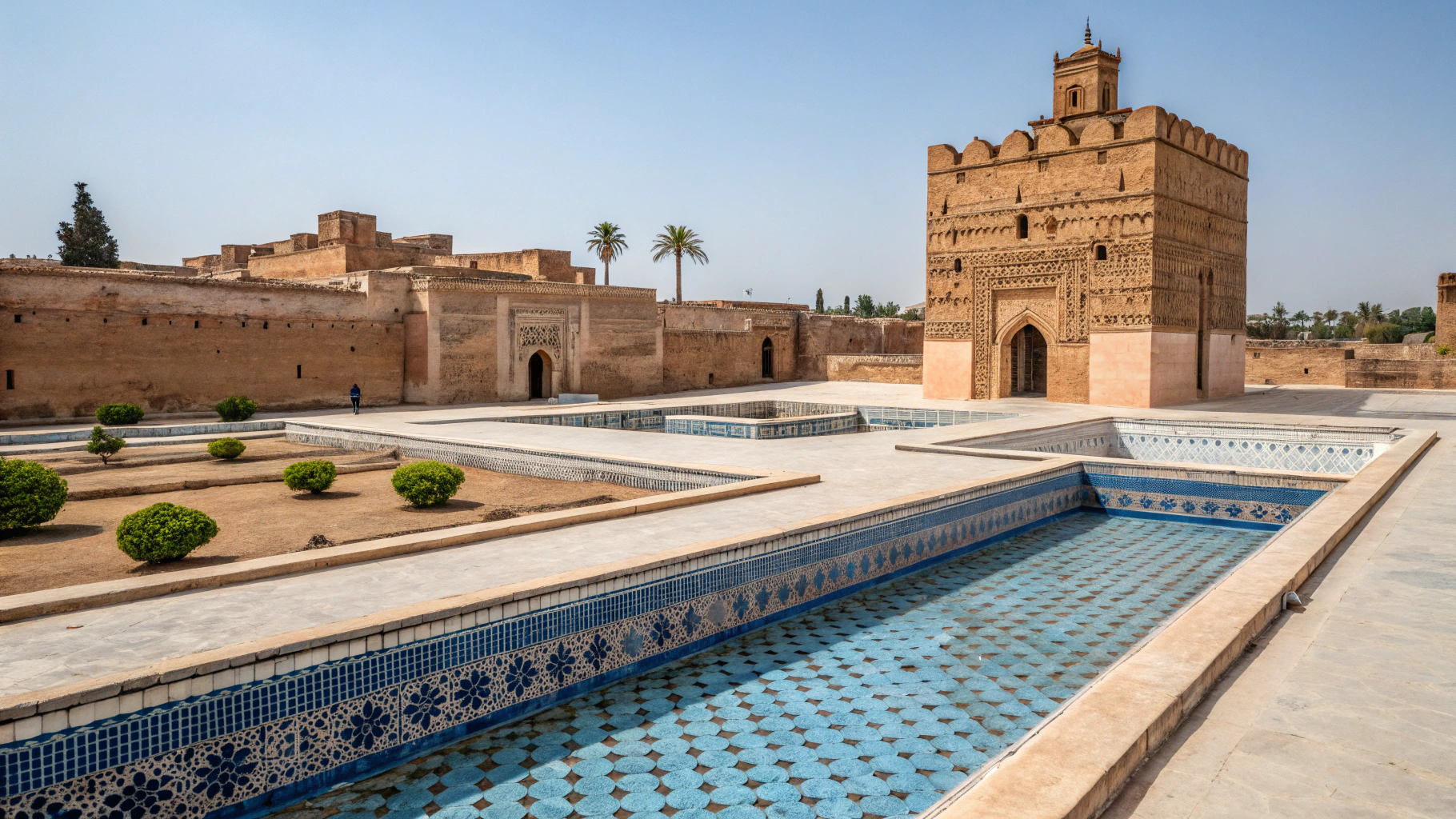
Introduction El Badi Palace
Did you know that the name "El Badi" literally translates to "the incomparable" in Arabic? Yet ironically, this once-magnificent structure now stands largely in ruins. What could cause such a spectacular palace to fall into disrepair after being one of North Africa's most impressive royal residences?
El Badi Palace represents one of Marrakech's most fascinating historical paradoxes. Built at the height of Saadian power in the 16th century and stripped bare just a century later, this massive complex tells a tale of imperial ambition, artistic achievement, and political vengeance unlike any other in Morocco. While thousands of tourists flock to the more intact royal buildings in Marrakech, many miss the profound beauty and historical significance hidden within these weathered walls.
Destination Overview
el badi palace marrakech was commissioned by Sultan Ahmad al-Mansur following his victory against the Portuguese in the Battle of the Three Kings (1578). Construction began in 1578 and took approximately 25 years to complete, employing the finest materials from across the empire and beyond:
- Italian marble
- Gold from Sudan
- Onyx from Algeria
- Jade and crystal from throughout the Mediterranean
The palace originally contained 360 lavishly decorated rooms surrounding a massive central courtyard featuring a 90×20 meter pool. Though now mostly ruins, the remaining structures provide a glimpse into the palace's original grandeur. The complex spans approximately 2 hectares (5 acres) in Marrakech's historic medina, just a 15-minute walk from the famous Jemaa el-Fnaa square.
Nearby attractions include the Bahia Palace, Saadian Tombs, and the vibrant souks of the medina—all within walking distance.
Best Time to Visit
Marrakech experiences extreme temperature variations, making timing crucial for your visit to El Badi Palace:
- Spring (March-May): Perfect weather with temperatures between 70-85°F (21-29°C). Enjoy 30% fewer crowds than summer months while exploring the expansive open-air ruins.
- Fall (September-November): Similar to spring but with a higher chance of occasional rain showers.
- Winter (December-February): Daytime temperatures average 65°F (18°C) but drop significantly at night. El Badi's lack of covering makes it chilly but offers the lowest tourist numbers.
- Summer (June-August): Avoid if possible as temperatures regularly exceed 100°F (38°C), making exploration of the unshaded ruins uncomfortable.
Pro tip: Visit during the annual Marrakech International Film Festival (typically November) when the palace occasionally hosts special screenings in its atmospheric courtyard.
How to Get There
El Badi Palace sits in the southern part of Marrakech's medina, making it easily accessible:
From Marrakech Menara Airport:
- Taxi: 15-20 minutes, approximately 100-150 MAD ($10-15)
- Bus: Take bus #19 to Jemaa el-Fnaa, then walk 15 minutes east; total cost 30 MAD ($3)
From Jemaa el-Fnaa Square:
- Walking: 15 minutes east through the medina
- Horse-drawn carriage (calèche): 5 minutes, around 50 MAD ($5)
Digital assistance:
- Use the app "Maps.me" which works offline and accurately marks the palace entrance (not always correctly shown on Google Maps)
The palace is open daily from 9 AM to 5 PM with an entrance fee of 70 MAD (approximately $7).
Step-by-Step Itinerary
Morning: Palace Exploration (2-3 hours)
Begin your visit early to avoid crowds and heat. Enter through the modest main entrance, which belies the grandeur that follows. Start with:
- Main Courtyard: Stand in awe of the vast rectangular courtyard with its enormous reflecting pool. The symmetry and scale here demonstrate Saadian architectural genius.
- Underground Chamber: Descend to see the subterranean chambers that reveal the palace's intelligent cooling system.
- Pavilion Ruins: Climb to the upper terraces for breathtaking views across the medina to the Atlas Mountains (best in clear morning light).
Afternoon: Surrounding Historical Sites
After exploring El Badi, continue your historical journey:
- Saadian Tombs (10-minute walk): These ornate burial chambers were sealed for centuries until their rediscovery in 1917.
- Bahia Palace (15-minute walk): A contrasting example of intact Moroccan palatial architecture.
- Mellah (Jewish Quarter): Explore the historic Jewish district adjacent to the palace.
Where to Stay
For the complete Marrakech experience, consider these accommodations near El Badi Palace:
Budget-Friendly ($40-80/night)
- Riad Dar Tayib: Just 5 minutes from the palace with authentic decor and rooftop views
- Hostel Waka Waka: Perfect for solo travelers, offering dormitories and private rooms
Mid-Range ($80-150/night)
- Riad Palais Calipau: Features a small plunge pool and traditional hammam
- Dar Anika: Offers complimentary guided medina tours for guests
Luxury ($150+/night)
- La Sultana Marrakech: 5-star luxury with a spa and rooftop restaurant
- Royal Mansour: Owned by the King of Morocco, offering the ultimate luxury experience
Food to Try
The area around El Badi Palace offers excellent culinary opportunities:
Local Specialties
- Tanjia Marrakchia: A slow-cooked meat dish unique to Marrakech
- Msemmen: Flaky square pancakes perfect for breakfast
- Bissara: Fava bean soup ideal during cooler months
Where to Eat
- Café Clock (5-minute walk): Try their camel burger and date milkshake
- Nomad (10-minute walk): Modern Moroccan cuisine with rooftop dining
- Street stalls near Bab Agnaou: Authentic local snacks at unbeatable prices
Best Photo Spots
Capture unforgettable images at these prime locations:
- Central Pool Reflections: Morning light creates stunning reflections in the pools
- Stork Nests: White storks nest atop the palace walls year-round
- Sunken Gardens: Frame shots through ancient doorways
- Rooftop Panorama: Climb to the highest accessible point for sweeping views
- Sunset from the Western Wall: Capture the palace walls glowing orange at sunset
Common Travel Mistakes to Avoid
- Skipping the museum: The small on-site museum contains valuable artifacts and contextual information
- Not bringing water: There's limited shade and few refreshment options inside
- Rushing the visit: Allow at least 2 hours to fully appreciate the palace
- Ignoring the minbar: Don't miss the exquisite pulpit from the Koutoubia Mosque displayed in a special room
Conclusion
El Badi Palace may stand in ruins, but its crumbling walls speak volumes about imperial ambition, architectural genius, and the transient nature of power. As you wander through its vast courtyards, climb its ancient ramparts, and imagine the splendor that once existed, you'll understand why this fallen jewel continues to captivate visitors centuries after its decline.
Unlike Marrakech's more intact monuments, El Badi offers something more profound—a meditation on time and legacy that transforms a simple sightseeing stop into a truly memorable travel experience. Don't just check it off your list; take time to absorb the atmosphere of this remarkable place where history whispers from every weathered stone.
FAQs
How long should I spend at El Badi Palace?
Most visitors spend 1-2 hours exploring the palace. History enthusiasts may want to allow up to 3 hours to fully appreciate all areas.
Is El Badi Palace accessible for visitors with mobility challenges?
The ground level courtyards are accessible, but many interesting features require climbing stairs. There are no elevators or ramps to upper levels.
What's the difference between El Badi Palace and Bahia Palace?
El Badi is largely in ruins but offers a sense of scale and historical significance, while Bahia Palace (built 300 years later) remains intact with ornate decoration, offering a glimpse of how El Badi might have looked in its prime.
Can I visit El Badi Palace and other major Marrakech attractions in one day?
Yes, you can visit El Badi Palace, Bahia Palace, and the Saadian Tombs in a single morning or afternoon as they're all within walking distance of each other.
Is there a dress code for visiting the palace?
While not strictly enforced, respectful dress is appreciated. Shoulders and knees covered is a good guideline, especially during religious holidays.