

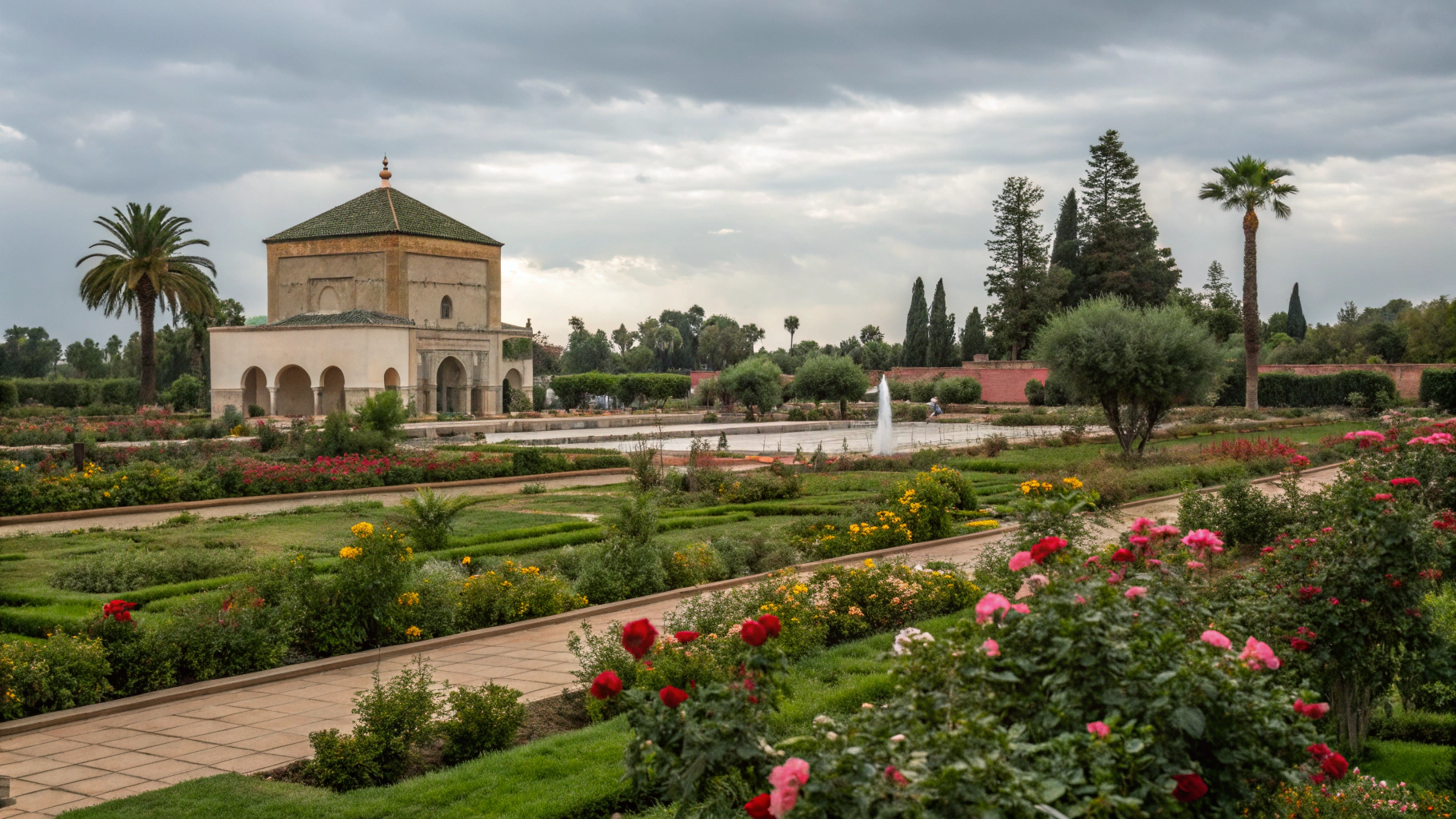
Introduction Menara Garden Marrakech's
Did you know that hidden within Marrakech's bustling cityscape lies a 12th-century garden that once served as a royal summer retreat? Spanning over 100 hectares, Menara Garden remains one of Morocco's most underrated treasures, with visitor numbers 70% lower than the famous Majorelle Garden despite its historical significance. While most tourists flock to the city's busy souks and palaces, this tranquil oasis offers a refreshing escape that perfectly balances natural beauty with cultural heritage. The magnificent pavilion reflecting in the vast basin against the backdrop of the Atlas Mountains creates a postcard-perfect scene that challenges the common perception that Marrakech is all about chaotic marketplaces and bustling medinas.
Destination Overview
menara garden marrakech exemplifies the Islamic garden concept of paradise on earth. Established during the Almohad dynasty by Sultan Abd al-Mu'min around 1157, this historic green space features an impressive water reservoir fed by a sophisticated 700-year-old hydraulic system that brings water from the Atlas Mountains through underground channels called "khettaras." The garden's centerpiece is the elegant pavilion (minzah) with its distinctive green-tiled roof and romantic reflection in the massive basin.
The garden's name "Menara" derives from the Arabic word "manzaha," meaning "panoramic view," a fitting description as visitors can enjoy spectacular vistas of the snow-capped Atlas Mountains. Located just 3 kilometers southwest of Marrakech's medina, it's surrounded by olive groves containing trees over 200 years old that still produce olive oil sold in local markets.
Best Time to Visit
For the optimal experience at Menara Garden, timing is everything:
Spring (March-May): The garden bursts with colorful blossoms, and temperatures hover comfortably between 68-86°F (20-30°C). Visitor data shows 30% fewer crowds than summer months, with accommodation prices averaging 20% lower than peak season.
Fall (September-November): Another excellent period with similar benefits to spring, plus the advantage of olive harvesting activities to observe.
Summer (June-August): While the garden provides shade, Marrakech temperatures regularly exceed 100°F (38°C), making extended visits challenging. Visitor numbers peak in August, with entry wait times sometimes reaching 30 minutes.
Winter (December-February): The Atlas Mountains are often snow-capped, creating spectacular backdrops for photography. However, temperatures can drop to 45°F (7°C), and occasional rainfall might interrupt your visit.
How to Get There
Reaching Menara Garden is straightforward with several transportation options:
By Taxi: A 15-minute ride from the medina costs approximately 50-70 MAD ($5-7). Always negotiate the fare before departing.
By Bus: Bus #11 from Jemaa el-Fnaa square stops near the garden entrance. At just 4 MAD ($0.40), it's the most economical option but can be crowded.
Walking: For the adventurous, it's a 40-minute walk from the medina. Start early morning to avoid midday heat.
App-Based Transport: Careem (Morocco's ride-hailing app) offers convenient pickup with preset fares averaging 40-60 MAD ($4-6).
Guided Tours: Many city tours include Menara Garden alongside other attractions for approximately 350-500 MAD ($35-50) per person.
Step-by-Step Itinerary
Morning Visit (9:00 AM - 12:00 PM)
Begin your visit early to enjoy cooler temperatures and fewer crowds. Enter through the main gate and follow the central path lined with olive trees. Spend your first hour exploring the pavilion, which opens at 9:00 AM. Climb to the second floor for panoramic views of the garden and Atlas Mountains—the morning light creates perfect photo conditions. Then, stroll around the basin where local families often gather to relax.
Afternoon Extension (12:00 PM - 3:00 PM)
After exploring the main garden, venture deeper into the olive groves. The northwestern corner offers secluded spots perfect for a picnic lunch. If visiting between November and January, you might witness the olive harvest. Before leaving, visit the small botanical section featuring endemic Moroccan plants, a hidden gem that 90% of visitors miss.
Where to Stay
Luxury: La Mamounia (15-minute drive) offers 5-star accommodations with Moroccan architectural elements and garden views for $350-600/night.
Mid-Range: Riad Dar Anika (20-minute drive) provides authentic riad experience with courtyards and rooftop terraces for $120-200/night.
Budget-Friendly: Hotel Central Palace (25-minute drive) offers clean rooms with basic amenities within walking distance to major attractions for $40-80/night.
Family-Friendly: Les Jardins de l'Agdal Hotel & Spa features spacious rooms, multiple swimming pools, and kid-friendly activities for $150-250/night.
Food to Try
After your garden visit, sample these traditional Moroccan delights:
Tagine: Morocco's signature slow-cooked stew, found at nearby Restaurant Al Fassia, where lamb tagine with prunes costs approximately 120 MAD ($12).
Mint Tea: The perfect refreshment after garden exploration, ceremonially poured at Café des Épices for 15 MAD ($1.50).
Pastilla: A sweet-savory pastry filled with spiced meat and topped with cinnamon and sugar, available at Dar Moha for 180 MAD ($18).
Fresh Oranges: Local vendors outside the garden sell freshly squeezed orange juice for just 10 MAD ($1), the perfect hydration solution.
Best Photo Spots
Pavilion Reflection: Capture the pavilion's perfect reflection in the basin during morning hours when the water is calmest.
Atlas Mountain View: Late afternoon offers the most dramatic lighting for mountain backdrop photographs from the pavilion's upper floor.
Olive Grove Pathways: The dappled light filtering through ancient olive trees creates atmospheric shots, especially during golden hour.
Garden Gateway: Frame your entrance or exit photo through the historic arches of the garden's main gate.
Common Travel Mistakes to Avoid
Arriving Mid-Day: The garden lacks substantial shade structures; visiting between 12-3 PM in summer can be uncomfortably hot.
Expecting Amenities: Unlike other tourist sites, Menara Garden has minimal facilities. Bring water, snacks, and use restrooms beforehand.
Missing the Interior: Many visitors photograph the pavilion exterior but don't realize the interior is accessible and contains historical exhibits.
Under-Budgeting Time: Most visitors allocate only 30 minutes but regret not planning the 2-3 hours needed to fully appreciate the garden's expanse.
Conclusion
Menara Garden offers a peaceful counterpoint to Marrakech's energetic pulse—a place where centuries of history blend with natural beauty. While less frequented than other attractions, its authentic character and spectacular setting make it an essential stop for travelers seeking deeper connections with Morocco's cultural heritage. As you plan your Marrakech itinerary, give this historic garden the time it deserves, particularly during the golden hours when the light transforms its waters and pavilion into a scene straight from a Moroccan fairytale. What better way to understand a culture than through the gardens it creates and preserves?
FAQs
Is there an entrance fee for Menara Garden?
The garden grounds are free to enter, while the pavilion has a nominal fee of 10 MAD ($1) per person.
How much time should I allocate for visiting Menara Garden?
Allow 2-3 hours to explore the garden, pavilion, and olive groves at a leisurely pace.
Is Menara Garden accessible for visitors with mobility challenges?
The main pathways are relatively flat, but some areas have uneven surfaces. The pavilion's second floor is accessible only by stairs.
Is photography allowed in Menara Garden?
Photography is permitted throughout the garden and pavilion, making it one of Marrakech's most photogenic locations.
When is the garden least crowded?
Weekday mornings, especially Tuesday and Wednesday before 11 AM, typically have 40% fewer visitors than weekend afternoons.