

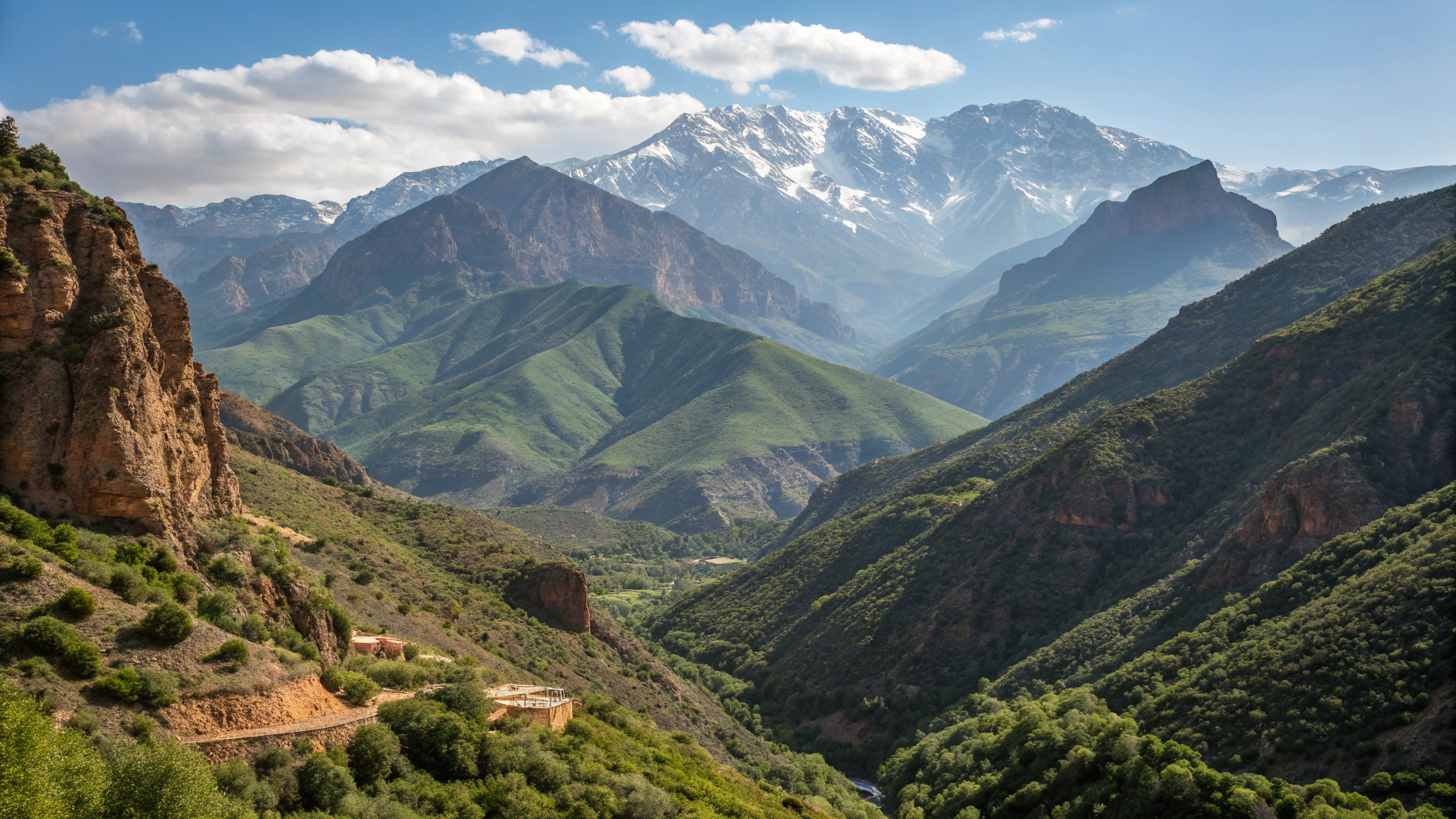
Atlas Mountains: Marrakech's Majestic Backdrop You Need to Explore
Introduction
Did you know that 90% of travelers to Morocco visit Marrakech, yet only 30% venture beyond the city to explore the spectacular mountain range that serves as its dramatic backdrop? The Atlas Mountains offer an extraordinary contrast to the bustling souks and vibrant medinas of Marrakech, presenting travelers with a serene landscape of rugged peaks, verdant valleys, and traditional Berber villages that seem frozen in time. But exactly where are the Atlas Mountains, and why should they be an essential part of your Moroccan adventure? Located just an hour's drive from Marrakech, this magnificent mountain range extends across Morocco, Algeria, and Tunisia, though the most accessible and tourist-friendly sections lie within Morocco itself.
Destination Overview
The Atlas Mountains form North Africa's greatest mountain range, stretching 2,500 km across Morocco, Algeria, and Tunisia. Within Morocco, the range divides into three distinct sections: the High Atlas, Middle Atlas, and Anti-Atlas. The High Atlas, closest to Marrakech, is home to North Africa's highest peak, Mount Toubkal, standing proud at 4,167 meters (13,671 feet).
What makes this region truly special is its remarkable diversity – from snow-capped peaks to lush valleys, red-clay villages to cascading waterfalls. The mountains harbor traditional Berber communities whose way of life has remained largely unchanged for centuries, offering travelers a genuine glimpse into Morocco's indigenous culture. Notable landmarks include the stunning Ourika Valley, the UNESCO World Heritage kasbah of Ait Ben Haddou, and the picturesque village of Imlil – the gateway to Mount Toubkal.
Best Time to Visit
The Atlas Mountains experience distinct seasonal shifts, making timing crucial for an optimal visit:
Spring (March-May): Perhaps the ideal time, with comfortable temperatures (15-25°C/59-77°F), wildflowers in bloom, and green landscapes. Visitor numbers are 40% lower than summer peaks, with accommodation rates approximately 20% cheaper.
Summer (June-August): Perfect for high-altitude trekking as temperatures at lower elevations can soar above 30°C/86°F. Mountain passes are clear, but expect to pay premium rates and encounter 35% more tourists than in shoulder seasons.
Fall (September-November): Another excellent period with mild weather and spectacular autumn colors. October sees 30% fewer visitors than August while offering equally favorable conditions.
Winter (December-February): For snow enthusiasts, the High Atlas transforms into a winter wonderland, with Oukaïmeden ski resort operating from December to March. Temperatures drop below freezing at altitude, but lower valleys remain surprisingly mild.
How to Get There
Reaching the Atlas Mountains is surprisingly straightforward:
From Marrakech: The most common starting point, with the foothills beginning just 30 minutes from the city. Private transfers cost approximately $30-50 one-way, while group tours start around $25 per person.
Public Transport: ALSA buses run to major towns like Ourika and Imlil for under $10, though schedules can be limited.
Car Rental: Offers maximum flexibility at around $30-45 per day. The roads to major spots like Ourika Valley are well-maintained, though mountain roads require confident driving.
Guided Tours: Range from $50 for day trips to $300+ for multi-day excursions, including transport, guides, and sometimes accommodation.
Download apps like Moovit or ALSA for local transport schedules, and consider ride-sharing services like BlaBlaCar for economical travel between major towns.
Step-by-Step Itinerary
Day 1: Ourika Valley & Setti Fatma
Start your Atlas adventure with the accessible Ourika Valley, just 35km from Marrakech. Depart early (8:00 AM) to beat the day-trip crowds and spend your morning exploring the valley's seven waterfalls near Setti Fatma. A local guide ($10-15) is recommended for the moderately challenging 2-hour hike to the upper falls. Enjoy lunch at a riverside café with panoramic valley views before visiting a traditional Berber home and an argan oil cooperative. Return to your accommodation by sunset to experience the changing colors of the mountains.
Day 2: Imlil & Toubkal National Park
Head to Imlil, the trekking capital of the High Atlas (90 minutes from Marrakech). From here, take a gentle 3-hour hike to Armed, the highest village in North Africa. The trail offers spectacular views of Mount Toubkal and passes through walnut groves and terraced fields. Stop for mint tea at a local café before returning to Imlil. Serious hikers can arrange overnight accommodation to summit Toubkal (a 2-day journey), while casual visitors can enjoy the numerous day hikes in the area.
Where to Stay
The Atlas Mountains offer accommodations to suit every preference and budget:
Budget ($20-50/night): Simple guesthouses and homestays in villages like Imlil and Ourika offer authentic experiences with basic amenities. Dar Adrar in Imlil provides clean rooms and mountain views from its rooftop terrace.
Mid-range ($80-150/night): Kasbah du Toubkal presents an award-winning eco-lodge experience with stunning panoramas and excellent hiking access. Domaine Malika offers boutique charm with an outdoor pool and gourmet restaurant.
Luxury ($200+/night): Sir Richard Branson's Kasbah Tamadot delivers five-star luxury with infinity pools, spa services, and exceptional dining. L'Amandier provides contemporary elegance with spectacular valley views.
Families should consider Touda EcoLodge for its spacious rooms and child-friendly activities, while solo travelers might prefer the social atmosphere of Dar Imlil or Riad Jnane Imlil.
Food to Try
The Atlas Mountains offer a culinary experience as diverse as its landscapes:
Tagine: The quintessential Moroccan dish slow-cooked to perfection, often featuring mountain-raised lamb with dried fruits and nuts. Try the apple and lamb variation unique to the Atlas region.
Berber Omelette: A fragrant breakfast dish cooked in a tagine with fresh mountain herbs and vegetables.
Tanourt: Traditional bread baked in clay ovens, often served with locally-produced honey and argan oil.
Mint Tea: The ceremonial Moroccan drink, especially refreshing with wild mint harvested from mountain streams.
For authentic experiences, visit Wednesday's market in Asni to sample local produce, enjoy a home-cooked meal at Café Soleil in Imlil, or try the farm-to-table offerings at Kasbah du Toubkal's restaurant.
Conclusion
The Atlas Mountains offer an essential counterpoint to Morocco's imperial cities and desert landscapes. From snow-capped peaks to lush valleys, traditional villages to dramatic gorges, this majestic range presents travelers with an authentic glimpse into Berber culture and some of North Africa's most spectacular scenery. Whether you're seeking adventure on high-altitude treks, cultural immersion in timeless villages, or simply a peaceful retreat from Marrakech's intensity, the Atlas Mountains reward visitors with experiences that linger long after returning home. As you plan your Moroccan adventure, remember that where are the atlas mountains is just the beginning of your discovery – it's what you experience among these ancient peaks that creates truly unforgettable travel memories.
FAQs
Is it safe to trek in the Atlas Mountains as a solo traveler?
Yes, the Atlas Mountains are generally safe for solo travelers. However, hiring a local guide is recommended, especially for multi-day or high-altitude treks. Guides typically cost $25-40 per day and provide valuable cultural insights alongside navigation.
How much should I budget for a 3-day trip to the Atlas Mountains?
Budget travelers can manage on $60-80 per day including accommodation, food, and basic transportation. Mid-range travelers should allow $120-200 daily, while luxury experiences start at $300+ per day.
Do I need a special permit to trek in the Atlas Mountains?
No special permits are required for standard trekking routes, including Mount Toubkal. However, you'll need to register with the national park office in Imlil before ascending Toubkal, which costs approximately $2.
What languages are spoken in the Atlas Mountains region?
Berber (Amazigh) is the primary language, though Arabic is also common. In tourist areas, English and French are widely understood, with French being more prevalent. Learning a few basic Berber phrases will be greatly appreciated by locals.