

Introduction Dress modestly
Have you ever wondered what it feels like to sleep under a blanket of a million stars, with nothing but golden sand dunes stretching to the horizon? Morocco's Sahara Desert experiences draw over 250,000 travelers annually from Marrakech, seeking precisely this transformative experience. A desert tour marrakech isn't just another travel activity—it's a journey that challenges your perception of time,
space, and natural beauty. Unlike typical city excursions, the Sahara offers something increasingly rare in our connected world: genuine disconnection and the opportunity to experience landscapes that have remained virtually unchanged for thousands of years. Whether you're dreaming of camel treks across rippling dunes or traditional Berber hospitality beneath canvas tents, this comprehensive guide will navigate you through everything you need to know.
Destination Overview
The Moroccan Sahara encompasses several distinct desert regions, each with its own character. Most 2 day desert tour marrakech packages focus on either the Zagora Desert (closer but less dramatic) or the Merzouga Desert with its towering Erg Chebbi dunes rising 150 meters high. These iconic rust-orange sandscapes have featured in numerous films, including parts of "The Mummy" and "Gladiator."
The journey from Marrakech traverses the spectacular Atlas Mountains via the Tizi n'Tichka Pass (2,260m elevation), offering breathtaking views across valleys dotted with Berber villages. Along the route, most tours include stops at historic kasbahs like Ait Benhaddou (a UNESCO World Heritage site) and the "Hollywood of Morocco," Ouarzazate, where numerous blockbusters have been filmed at Atlas Studios.
Best Time to Visit
Morocco's desert climate follows dramatic seasonal patterns that directly impact your experience:
October to April (Ideal Season): Daytime temperatures range from 15-25°C (59-77°F), making activities comfortable. Nighttime temperatures drop significantly to 0-10°C (32-50°F), requiring warm clothing but offering crystal-clear star-gazing conditions. Tours during this period cost approximately 15-20% more than summer options.
May and September (Shoulder Season): Offering the best value-to-comfort ratio with temperatures between 25-32°C (77-90°F) and pleasant evenings around 15°C (59°F). Hotel availability increases by about 30% compared to peak months.
June to August (Summer): Extreme daytime heat can exceed 45°C (113°F), limiting outdoor activities to early morning and evening. While prices drop by about 25%, the experience is significantly compromised by the scorching temperatures.
Most desert experts recommend against Ramadan visits (dates vary yearly), as many facilities operate on reduced schedules.
How to Get There
While direct access to the desert requires overland travel, the journey begins in Marrakech:
International Access: Marrakech Menara Airport (RAK) receives flights from over 100 European cities. Flight prices average €150-250 from major European hubs, with budget carriers offering fares as low as €50 during promotions.
Desert Transfer Options:
- Organized Tours: The most hassle-free option, with prices ranging from €80 for a basic desert tour marrakech to €300+ for luxury experiences.
- Private Transport: Approximately €150-200 per day for a vehicle with driver.
- Public Transport: Budget-friendly but time-consuming, with CTM buses to Merzouga (12 hours) costing around €15-20.
- Self-Drive: Rental cars start at €30/day, but navigation challenges and road conditions make this suitable only for experienced drivers.
Local booking platforms like MarrakechDesertExcursions.com often offer 10-15% better rates than international aggregators.
Step-by-Step Itinerary
Day 1: Marrakech to Desert Gateway
Morning (7:00-8:00 AM): Departure from Marrakech hotels, crossing the spectacular High Atlas Mountains via the Tizi n'Tichka pass, reaching 2,260 meters above sea level.
Mid-morning (10:30 AM): Photo stop at the highest point of the pass, offering panoramic views of zigzagging roads and Berber villages.
Lunch (1:00 PM): Visit Ait Benhaddou Kasbah, Morocco's most famous fortified village and UNESCO site. Explore its ancient lanes and climb to the granary for spectacular views. Local guides charge approximately €5-7 and provide fascinating historical context.
Afternoon: Continue to Ouarzazate, visiting Atlas Film Studios (€8 entrance) where scenes from Game of Thrones and Gladiator were filmed.
Evening: Arrive at your overnight accommodation in either Zagora (for 2 day desert tour marrakech) or Dades Gorge (for 3-day tours). Enjoy a traditional Moroccan dinner with local musicians.
Day 2: Desert Immersion
Morning: After breakfast, travel through changing landscapes to the desert frontier. The Draa Valley's 1 million palm trees create a stunning green ribbon through the arid terrain.
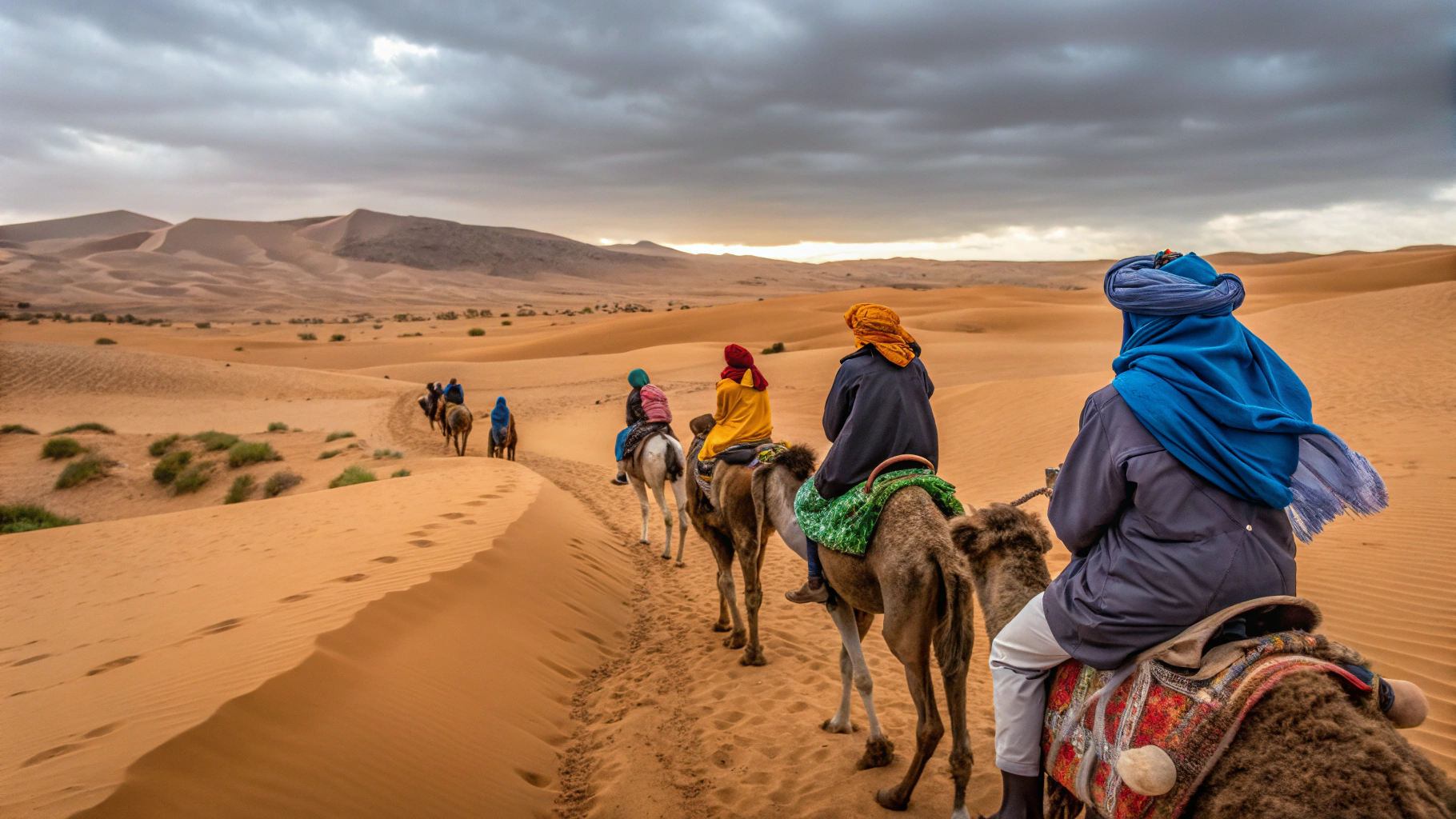
Afternoon: Arrive at the desert camp by 4:00 PM. Change into comfortable clothes and meet your camel caravan for a 1-2 hour sunset trek into the dunes. Pro tip: Wear long pants to prevent chafing!
Evening: Experience traditional Berber hospitality at your desert camp. Most camps offer:
- Dinner under the stars
- Traditional music around the campfire
- Sandboarding on nearby dunes
- Stargazing with surprisingly detailed visibility of the Milky Way
Night: Sleep in traditional nomad tents equipped with proper beds and linens. Premium camps offer private bathrooms, while standard options typically provide shared facilities.
Where to Stay
The desert offers accommodation options across all budget ranges:
Budget-Friendly (€30-50/night):
- Auberge Kasbah Dunes: Simple rooms with shared bathrooms and basic desert camps.
- Nomad Palace: Authentic experience with communal dining and basic amenities.
Mid-Range (€60-120/night):
- Kasbah Mohayut: Family-run hotel with pool, private bathrooms, and comfortable desert camps.
- Riad Madu: Charming rooms with Saharan décor and mid-range desert tents with proper beds.
Luxury (€150-300+/night):
- Desert Luxury Camp: Private ensuite tents with proper beds, fine dining, and exclusive experiences.
- Merzouga Luxury Desert Camps: Air-conditioned suites with premium linens, gourmet meals, and private tours.
Families should consider accommodations with connecting tents, while solo travelers might appreciate the communal atmosphere of budget camps.
Food to Try
The desert culinary experience centers around these must-try dishes:
Tagine: Slow-cooked stews prepared in conical earthenware pots, often featuring lamb with prunes or chicken with preserved lemon and olives.
Berber Pizza (Medfouna): A stuffed bread baked in sand oven containing spiced meat, vegetables, and herbs.
Harira: Hearty soup with tomatoes, lentils, chickpeas, and aromatic spices—often served as a starter.
Sand Bread (Khobz): Traditional bread baked in hot sand, then cleaned and served warm with olive oil.
Mint Tea: The national drink, prepared ceremonially with fresh mint and generous amounts of sugar.
The most authentic food experiences come from camp kitchens rather than restaurants, where dishes are prepared using traditional methods passed down through generations.
Best Photo Spots
Capture unforgettable desert moments at these prime photography locations:
Sunrise Dunes: Climb to the top of a high dune 30 minutes before sunrise (guides can direct you to the best ones). The first light creates dramatic shadows and rich golden hues across the rippling landscape.
Camel Silhouettes: Position yourself with the sun behind your subjects during late afternoon (around 5:00-6:00 PM depending on season) for classic silhouette shots.
Starry Night Skies: Use a tripod and long exposure (15-30 seconds) between 9:00 PM and 4:00 AM. The Sahara's dark skies offer spectacular views of the Milky Way.
Desert Camp Panorama: Capture the golden hour glow on tent canvases against the dunes between 4:30-5:30 PM.
Pro tip: Bring protective gear for your camera as fine sand can damage equipment. Simple plastic bags and lens filters make a significant difference.
Common Travel Mistakes to Avoid
Ensure a smooth desert experience by avoiding these common pitfalls:
Booking the shortest tour possible: Many travelers regret choosing one-day desert trips that involve 8+ hours of driving for just 30 minutes in the actual dunes.
Underestimating temperature variations: Desert temperatures can swing by 30°C between day and night. Pack for both extremes.
Forgetting water: Dehydration is a serious risk. Consume at least 3 liters daily, even if you don't feel thirsty.
Over-relying on digital connectivity: Cell service is virtually non-existent in the deep desert. Download maps and information in advance.
Missing the sunrise: Nearly 40% of travelers oversleep and miss what guides consistently identify as the most magical desert moment.
Conclusion
From the moment the Sahara's first dunes appear on the horizon to your final sunset camel ride, a desert tour marrakech delivers experiences that will remain vivid long after your footprints have vanished from the sand. While the journey requires some planning and preparation, the reward—disconnection from daily life and connection with one of Earth's most awe-inspiring landscapes—offers perspective that few other destinations can match. Whether you choose a simple 2 day desert tour marrakech or an extended expedition, the Sahara's magic remains consistent: silence that speaks volumes, stars that light the imagination, and hospitality that transcends language. Begin planning your desert adventure today, and discover why travelers throughout history have been drawn to this golden wilderness.
FAQs
Is a desert tour from Marrakech safe for solo travelers?
Yes, with reputable companies. Solo travelers comprise approximately 35% of desert tour participants, and tour structures naturally create social environments. Female solo travelers should research companies with positive reviews specifically from other women travelers.
How much should I budget for a quality desert experience?
For a 2-3 day tour with standard accommodation, budget €100-150 per person. Luxury experiences with premium camps start at €250 per person. Budget options exist from €80 but often involve larger groups and basic facilities.
Do I need special insurance for desert tours?
Regular travel insurance typically covers desert excursions, but verify that your policy doesn't exclude "adventure activities." About 75% of standard policies provide adequate coverage, but medical evacuation is worth confirming.
What's the bathroom situation in desert camps?
Standard camps offer shared composting toilets and basic shower facilities with limited water. Luxury camps provide en-suite bathrooms with proper flushing toilets and heated shower water. Regardless of camp type, bring biodegradable wet wipes.
Is haggling expected when booking desert tours?
While negotiating is common in Moroccan souks, established desert tour companies generally offer fixed prices. However, group discounts of 10-15% are often available when booking for 4+ people.